Friday, February 23, 2007
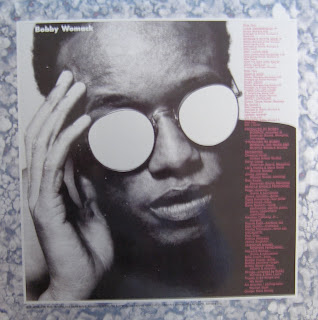
Bobby Womack - 1972 - Understanding

Tracks
The Reviews
1
2
As compelling as Bobby Womack's lacerating baritone may be, it still has that uncanny ability to be an engaging voice. This album has that timeliness appeal. It features the chart-buster in the mid-tempo number "Woman's Gotta Have It." It was a number one single on the Billboard R&B charts. In addition to the aforementioned song, Womack also features a host of other granite numbers like "Ruby Dean" and "I Can Understand It." The latter, penned by Womack , was also covered by New Birth. Both versions are excellent. However, Womack's version has a soothing effect as it employs a sensuous string arrangement while New Birth's rendition is rather funky, retaining a spirited horn arrangement. Womack's version was never a release. "Harry Hippie" is a narrative about his brother and former bandmate Harris Womack. It checked in at number eight. The Ohio native's unique trait to calm a song with his blistering baritone re-surfaces on "Sweet Caroline," the album's third and final release. For a song to be so sweet and gentle, Womack enhances the flavor of this sentimental number with a heartfelt, soulful approach. It slipped into the Top 20 at 16. By all standards, this album is stirring.
Labels: B, nikos1109, W Links to this post 

Sunday, February 18, 2007
Barbara Mason - 1973 - Lady Love

I first heard Barbara Mason a few years ago. It just blew me away. If you love soul you will love this album.
Barbara Mason is very underrated. One of the best soul singers of the 60's and 70's. Every song she sings you can feel the emotion that she puts into it. She is every bit as good as Aretha Franklin, Diana Ross, or Gladys Knight.
Tracks

1
Philadelphia Soul legend singer/songwriter Barbara Mason has been credited as the "Originator" of what is "Philly Soul". Inspired by Major Lance as a teen, in 1965 at age 17 she penned the all-time classic ballad, "Yes, I'm Ready". Ms. Mason established herself as a truly unique female soul artist. The writer of many of her recordings , her music reveals a young girls journey to womanhood. She has shared the stage with Curtis Mayfield, Jackie Wilson, Isaac Hayes, The Temptations and countless other top artists. Her songs have been recorded, covered and sampled by an array of artists from, R&B and HipHop to the Pop and Jazz genres. Her music can be found on various Classic Soul and R&B compilations, as well as soundtracks for the motion pictures, "Auto Focus", and the acclaimed Indie film, Jesus Son. Ms. Masons vocal style has been a major influence on the careers of many of today’s leading female R&B artist such as; Angie Stone, Alicia Keys and Mary J. Blige. She has founded her own recording label and music production company, Lioness Recordings, and Mason Media Productions in addition to her music publishing company.
2
Known affectionately as “Lady Love”, Barbara Mason has enjoyed a long and distinguished career as one of Philadelphia‘s prime purveyors of song. From the teen angst of her classic “Yes I’m Ready” to the time-worn complexities of a love triangle expressed through the lyrics of “From His Woman To You,” her 1974 pop and R&B hit, Barbara has always found favor with the record-buying public thanks to her ability to explore the eternal theme of relationships, good, bad and in between.
Originally attracted to music as a result of ‘tinkling’ on her grandmother’s piano, Barbara formed a number of vocal groups while in her early teens, acting as both lead singer and accompanist. A neighbour, Weldon McDougal III was a member of The Larks, a popular vocal group of the day, and impressed with her talent, he invited her to perform on local shows with the group. It was McDougal who introduced Barbara to Jimmy Bishop, one of Philly’s most popular disc-jockeys and as a result, she recorded her first single, “Trouble Child” for the local Crusader label.
A move to Arctic Records proved fortuitous: while her initial 45 for the label (“Girls Have Feelings Too”) achieved a modicum of success, it was Barbara’s self-penned tale of anticipation from innocent teen to full-grown woman that captured the attention of music lovers nationwide. “Yes I’m Ready” not only established Barbara as a consistent chartmaker but became her signature tune, subsequently recorded by other major artists including K.C. (of Sunshine Band fame) and Teri De Sario, Gladys Knight & The Pips and Carla Thomas. Worth noting: some of the participants on that original “Yes I’m Ready” session included a teenage Kenny Gamble, musicians Bobby Eli, Roland Chambers, Jack Faith and Earl Young, all key players in what would become known as the “Philly Sound.”
After a couple of notable Arctic hits including “Oh How It Hurts,” Barbara spent the better part of the next five years with Buddah Records achieving success with “Bed And Board,” Curtis Mayfield’s “Give Me Your Love,” the afore-mentioned “His Woman To You,” (an ‘answer’ song to Shirley Brown’s 1974 hit “Woman To Woman”) and “Shackin’ Up.” A brief stint with Curtom Records was followed by a return to the R&B charts in 1978 with “I Am Your Woman, She Is Your Wife” and continuing the theme of the twists and turns in personal relationships, Barbara scored another hit with “She’s Got The Papers (But I Got The Man)” in 1981. A single for the dance music label, West End stoked some controversy: “Another Man” wove the tale of a woman who loses her man to…another man! Popular in Europe in particular, the song kept Barbara’s name active among music buyers who appreciated the truth and honesty in the lyrical themes that Barbara has recorded since she started out in the ‘60s.
Active as a performer whose appearance on a PBS rhythm-and-blues special a few years back was undoubtedly one of the show’s highlights. Barbara Mason’s legacy of ‘tell-it-like-it-is” recordings is much-treasured by soul music lovers the world over.
Download Link :
barbara_mason_-_1973__-_lady_love.rar
Labels: M, nikos1109 Links to this post
Thursday, February 15, 2007
Gloria Scott - 1974 - What Am I Gonna Do

A Legentary Soul Album by a lady with a velvet voice.
Another classic from the rare groove days, with originals changing hands for over £100. Produced by Barry White with Tom Brock and Vance Wilson, it includes the soul weekender special Too Much Lovemakin and much sought after title track.
2. It's Better To Have No Love 3.16
3. I Think Of You 4.40
4. Love Me, Love Me, Love Me Or Leave Me, Leave Me Leave Me 4.19
5. I Just Couldn't Take A Goodbye 4.31
6. That's What You Say (Everytime You're Near Me) 3.18
7. (A Case Of) Too Much Lovemakin' 3.51
8. Help Me Get Off This Merry-Go-Round 3.45

1
Possibly the hottest of the bunch is this gorgeous modern soul affair from Casablanca Records in 1974. Born in Texas Gloria became a member of Ike & Tina Turners backing group The Ikettes, and this release couldn't be further from that sound. After moving to Holywood her then manager introduced her to Barry White who at that time was just breaking big himself via his own solo career, as well as producing the aforementioned Love Unlimited. White took over the production on Gloria on this album, plus another later in 1974 which have become major collectors items. The opening track which made it to a 45 did very little at the time and one now looks back in total amazement at a missed opportunity for a hit record. The northern soul fraternity always looking for new tunes picked up on her 'Too Much Lovemakin' for their modern scene where this is still very much in demand. A fabulous orchestrated uptempo affair displaying Gloria's vocal talents to the max, and a song to truly sell this set. The song 'Help Me Get Off This Merry-Go-Round' remains a song I keep returning to which is pure soul that today's artist can only look to in admiration. A truly exceptional singer - and a truly exceptional CD - Rating 11/10
2
One of the greatest soul records of all time and an album that we'd never part with! Gloria Scott only ever recorded this one full LP but that's more than enough, as the whole thing's a masterpiece produced by Barry White with the best of his 70s approach, and featuring songs written by lesser known White protege, Tom Brock! Nearly every single cut's a classic a mixture of deep soul, mellow soul, and slight traces of funk all gliding effortlessly together with White's stone cold production, and Gloria's instantly captivating vocals. Titles include "Love Me, Love Me, Love Me, or Leave Me, Leave Me, Leave Me", "I Think Of You", "That's What You Say", and "Too Much Lovemakin" -- and the whole thing's great!
gloria_scott_-__what_am_i_gonna_do.rar
Labels: G, nikos1109, S Links to this post
Monday, February 12, 2007
Ohio Players - 1975 - Honey (256@ + Covers)

Legendary pioneers of street funk, the Ohio Players went platinum with this hot 1975 release that includes the chart-topping disco/funk classic "Love Rollercoaster". Sexy, horn-driven grooves, hypnotic rhythms, and bottom-heavy jams take us on a fresh and funky new dimension.

Tracks
1 Honey (5:17)
2 Fopp (3:52)
3 Let's Do It (5:12)
4 Ain't Givin' up No Ground (1:42)
5 Sweet Sticky Thing (6:12)
6 Love Rollercoaster (4:48)
7 Alone (4:38)
There is an urban legend about the song Love Rollercoaster. About two minutes into the song, a faint scream is heard. the urban legend states that the scream is that of the model on the cover of the album. Allegedly, the model was kneeling on fiberglass and pouring honey onto herself. The honey bonded her to the glass, and her skin was ripped off in the effort to unstick her. She confronted the manager during the recording of the song, who then proceeded to stab her to death,
This myth is false, however. The scream was made by keyboardist Billy Beck. A local DJ made up the rumor, and the band kept with it to boost sales of the album.

The Review
By the time of 1975's HONEY, the Players had streamlined their album covers from HUSTLER-ish to PLAYBOY-ish, while keeping their music still delightfully funky & sexy beyond description. 1974's FIRE contained their first #1 pop hit with the title track, and the music was definitely what its title stated: blazing! While HONEY hints at something a little more, well, smooth, it's still a fantastic album with enough grit to rock the dance floors before putting on the slower stuff when you get back home.
"Love Rollercoaster" was the Player's 2nd #1 pop hit, and is probably their most famous song thanks to cover versions like that from the Red Hot Chili Peppers. While the Peppers' version was a good White-boy version of it, the Players' one is still the funky king, one to get you up & moving no matter how many times it's been played at parties, sporting events or oldies radio.
"Fopp" is another chaotic funky delight with the opening drum line indeed sounding reminiscent of the opening to Guns N' Roses' "Paradise City". Maybe Axl Rose needs to pay some restitution to the Players, who knows?
As has been proven time & time again, ballads were always the Players' secret weapon, and they remain underrated with all the loud, screaming funk that was their trademark. "Sweet Sticky Thing" was lucky to be released for it is indeed much smoother-edged than what the Players were known for at the time. The fact this jazz-grooved tune (man, that saxophone!) did so well really says something.
The opening title track was a brave way to start out the album, especially after just having a massive #1 hit with "Fire". I can easily imagine this song coming from Earth, Wind & Fire, who were probably the only other group the Players could really compete with in the funk sweepstakes (Parliament/Funkadelic were already the kings, so they were out of the running).
"Let's Do It" is another romantic jam to melt your lover's heart with, and hopefully you won't find yourself singing the closing ballad "Alone" before long. The man singing this song is all-too-obviously heartbroken and, as my good friend Nathan says, it definitely is a forgotten treasure of '70s R&B balladry with Leroy "Sugarfoot" Bonner's lead vocal just tear-inducing. Even the spare musical back-up on the song heightens its emotional nakedness.
HONEY was produced, written & performed by the Players themselves, so you know the album is exactly how they would have wanted it. Even those ever-present covers were their brainchild, with HONEY's being the undoubtedly the most famous of all (the inner photo is a true "how could they do it?" affair).
While the Players have been sampled like mad by hip-hop artists for years, and are still adored by R&B lovers today, they have been sort of overlooked in the overall pantheon of popular music. Earth, Wind & Fire have been inducted in the Rock & Roll Hall of Fame, as has Parliament/Funkadelic, so why not the Players? Until that day comes, we can be sure that an album as fantastic & funky as HONEY will be one of the things that gets them in there.
Download Link
ohio_players__1975_-_honey.rar
Labels: nikos1109, O Links to this post
Sunday, February 11, 2007
The Shirelles - 1962 - Baby It's You

The Shirelles were originally formed in 1958 in Passaic, NJ, by four high school friends: Doris Coley (later Doris Kenner-Jackson), Addie "Micki" Harris, Shirley Owens (later Shirley Alston), and Beverly Lee. Christening themselves the Poquellos, the girls wrote a song called "I Met Him on a Sunday" and entered their school talent show with it. A school friend had them audition for her mother, Florence Greenberg, who ran a small record label; she was impressed enough to become the group's manager, and changed their name to the Shirelles by combining frequent lead singer Owens' first name with doo woppers the Chantels. The Shirelles' recording of "I Met Him on a Sunday" was licensed by Decca and climbed into the national Top 50 in 1958. Two more singles flopped, however, and Decca passed on further releases. Greenberg instead signed them to her new label, Scepter Records, and brought in producer Luther Dixon, whose imaginative, sometimes string-heavy arrangements would help shape the group's signature sound.
"Dedicated to the One I Love" (1959) and "Tonight's the Night" (1960) both failed to make much of an impact on the pop charts, although the latter was a Top 20 R&B hit. However, they broke big time with the Goffin-King composition "Will You Love Me Tomorrow"; released in late 1960, it went all the way to number one pop, making them the first all-female group of the rock era to accomplish that feat; it also peaked at number two R&B. Its success helped send a re-release of "Dedicated to the One I Love" into the Top Five on both the pop and R&B charts in 1961, and "Mama Said" did the same; a more R&B-flavored outing, "Big John," also went to number two that year. 1962 continued their run of success, most notably with "Soldier Boy," a Luther Dixon/Florence Greenberg tune that became their second pop number one; they also had a Top Ten pop and R&B hit with "Baby It's You." Unfortunately, Dixon subsequently left the label; the Shirelles managed to score one more pop/R&B Top Ten with 1963's "Foolish Little Girl," but found it difficult to maintain their previous level of success.
The group went on to record material for the film It's a Mad, Mad, Mad, Mad World, headlined the first integrated concert show in Alabama, and helped a young Dionne Warwick get some of her first exposure (subbing for Owens and Coley when each took a leave of absence to get married). A money dispute with Scepter tied up their recording schedule for a while in 1964, and although it was eventually settled, the Shirelles were still bound to a label where their run was essentially over. Of course, this was also because of the British Invasion, whose bands were among the first to cover their songs; not only their hits, but lesser-known items like "Boys" (the Beatles) and "Sha La La" (a hit for Manfred Mann). The Shirelles scraped the lower reaches of the charts a few more times, making their last appearance, ironically, with 1967's "Last Minute Miracle." Doris Kenner left the group the following year to concentrate on raising her family, and the remaining Shirelles continued as a trio, cutting singles for Bell, United Artists, and RCA through 1971. The group continued to tour the oldies circuit, however, and appeared in the 1973 documentary Let the Good Times Roll. Shirley Alston left for a solo career in 1975, upon which point Doris Kenner-Jackson returned. Micki Harris died of a heart attack during a performance in Atlanta on June 10, 1982, upon which point the group went into what turned out to be a temporary retirement; the three remaining charter members recorded together for the last time on a 1983 Dionne Warwick record. Different Shirelles lineups toured the oldies circuit in the '90s, though Beverly Lee eventually secured the official trademark. They were officially inducted into the Rock and Roll Hall of Fame in 1996. Doris Kenner-Jackson passed away after a bout with breast cancer in Sacramento on February 4, 2000.
Labels: Roxanne, S Links to this post
Friday, February 9, 2007
Cymande - Best of Cymande

Cymande - Best of Cymande
@320
Tracklist :
01 The Message
02 Brothers on the Slide
03 Dove
04 Bra
05 Fug
06 For Baby Woh
07 Rickshaw
08 Equitorial Forest
09 Listen
10 Getting It Back
11 Anthracite
12 Willy's Headache
13 Genevieve
14 Pon de Dungle
15 Rastafarian Folk Song
16 One More
17 Zion I
Short-lived but legendary, Cymande is oft-compiled on funk assemblages, but this CD of their first two LPs is altogether necessary, even if the music moves away from tight beats into Rasta-folk toward the end. Cymande's reputation has grown considerably over the last twenty years. Featuring a multi-national crew with a strong Caribbean influence, the band produced a few hits in the early seventies, then disappeared. But the epochal "Brothers On the Side," and the ingeniously structured "Fug" contain a subtlety and tension lacking in all but the best bands of the era. As usual, the Collectables label's sound quality is passable, but nothing to brag about. --D. Strauss
Invigorating head music done Rastafarian style by Cymande. "Zion I" is a spiritual chant put to music, setting the mood for Cymande. A laid-back "One More" lulls you into subliminal meditation before "Getting It Back" jolts you into some scintillating Jamaican funk-fusion. There's a message in many of Cymande's cuts, with "Listen," and "Bra" (a recognition of the women's lib movement), the most inspiring. Both are sung with passion, and are skillfully executed; the former is slow and painstaking in its message, while "Bra" slaps you upside the head with a stirring sax solo and bass-fueled vamp. An air of supreme coolness permeates Cymande, unusual for a first effort written by members of the band. Cymande sound like they have done this before; nowhere is this more evident than on the beautiful "Dove," a gorgeous concoction of lead guitar, tambourines, haunting backing vocals, and percussion, with the horns used as sparingly as table-seasoning on a gourmet dish. Along with "Bra," the group's most popular cut is "The Message" -- it's difficult keeping body parts still on this grooving mutha. All in all, Cymande is a marvelous collection that premiered a fine funk band. ~ Andrew Hamilton, All Music Guide
Biography :
Although underappreciated and woefully overlooked during their original tenure together, the fine early-'70s outfit Cymande (pronounced Sah-mahn-day) was one of the first to merge African rhythms with rock, funk, reggae, and soul. Comprised of members who hailed from such exotic locales as Guyana, Jamaica, and St. Vincent, the nine-man lineup (who were all entirely self-taught) contained Steve Scipio (bass), Ray King (vocals, percussion), Derek Gibbs (alto/soprano), Pablo Gonsales (congas), Joey Dee (vocals, percussion), Peter Serreo (tenor), Sam Kelly (drums), Mike Rose (alto, flute, bongos), and Patrick Patterson (guitar). The band issued a total of three releases: 1972's self-titled debut (which spawned one of their best-known songs, "The Message," peaking at number 22 on the domestic R&B charts in 1974), 1973's Second Time Around, and 1974's Promised Heights -- before splitting up. But by the '90s, Cymande became the recipient of a strong cult following as another track from their debut, "Bra," was included on the soundtrack to Spike Lee's motion picture Crooklyn, and several of their songs were sampled by rap artists (including Raze, Master Ace, MC Solaar, De La Soul, DJ Kool, and the Fugees). Due to sudden interest in Cymande, a pair of compilations were issued -- a British double CD titled The Message (which collected all three of their albums) and a 13-track collection, The Soul of Rasta. ~ Greg Prato, All Music Guide
Cymande.part1.rar
Cymande.part2.rar
Cymande-12-Willy_s_Headache.mp3
Labels: C, Lost-In-Tyme Links to this post
Thursday, February 8, 2007
Bloodstone - 1973 - Unreal

Charles McCormick (lead vocal, bass guitar)
Charles Love (lead vocal, guitar)
Willis Draffen (vocal, guitar)
Henry Williams (vocal, percussion)
Eddie Summers (drummer)

Tracks
1. Outside Woman
2. What Did You Do To Me? (Part 1)
3. What Did You Do To Me? (Part 2)
4. Unreal
5. Everybody Needs Love
6. Something
7. Keep Our Own Thing Together
8. Let Me Ride
9. Traffic Cop, The (Dance)
10. Moulded Oldies: Hound Dog / Searchin' / So Fine

In fact, Bloodstone was a very good funk-soul group using the Hendrix-derived licks of Charles Love and Willis Draffen against multiple percussion ideas to underpin a vocal blend that still owed its soul to gospel and doo wop. Bloodstone received no record company interest in L.A., however, so at the advice of its manager, the group relocated to London in 1971. There, they teamed up with Mike Vernon, founder of the Blue Horizon label, who'd made his bones producing an album with the great Chicago pianist Otis Spann; white blues acts like Fleetwood Mac and Savoy Brown; and early Euro-rock with Focus. Vernon took Bloodstone into the studio and by early 1973, its debut single, "Natural High," had cracked the RB and pop Top Ten, becoming the group's defining song.
Vernon produced the first five Bloodstone albums, which garnered seven Top 20 RB singles, almost all of which made the pop Top 40. The group was a big concert draw, and its album sold well, if not spectacularly. Somehow, all of this was parlayed into a 1975 film deal. Train Ride to Hollywood is arguably the funniest picture of the whole '70s blaxploitation film boom, derived in equal parts from the Marx Brothers and such early spoofs as The Palm Beach Story and International House. Somehow, amidst the slapstick and the reefer jokes, Bloodstone wedges in a fairly complete history of black vocal harmony music from the Mills Brothers to the Coasters to their own bad selves. They do it even better on the soundtrack album. The group then faded from popular view, despite a brief stint at Motown, until the early '80s, when it hooked up with the Isley Brothers' T-Neck and scored a commercially and artistically successful album, We Go a Long Way Back, produced by the Brothers. The title track returned them to the RB Top Ten in 1982, but although several other T-Neck singles charted, the group's recording career essentially ended there. Nevertheless, this heartland group had made a significant mark and can lay fair claim to being one of the first to figure out its particular era's future.
Download Link:
Labels: B, nikos1109 Links to this post
Monday, February 5, 2007
The Ebonys - 1973 (224@ plus bonus tracks)

A Golden Philly Classic!
Their only album for Philadelphia International in it's best period.

2. It's Forever
3. Life In The Country
4. Sexy Ways
5. I'm So Glad I'm Me
6. I'll Try
7. Nation Time
8. I Believe
9. You're The Reason Why
The Reviews
Download Link:
Labels: E, nikos1109 Links to this post
Saturday, February 3, 2007
Rotary Connection - 1971 - Hey Love

Some of the trippiest soul music ever recorded -- an amazing collection of work by the legendary Rotary Connection -- early home to vocalist Minnie Riperton and arranger Charles Stepney!

The Band
Minnie Riperton, soprano (voice)
Kitty Haywood, soprano & alto (voice)
Shirley Wahls, contralto (voice)
Dave Scott, tenor (voice)
Charles Stepney, piano, harpsichord, organ, electric piano
Sydney Simms, bass
Donny Simmons, drums
Phil Upchurch, Pat Ferreri, guitar
Master Henry Gibson, congas
Produced by Charles Stepney
Tracks
A1 If I Sing My Song (2:53)
A2 The Sea & She (3:30)
A3 I Am The Blackgold Of The Sun (5:20)
A4 Hanging 'Round The Bee Tree (3:32)
A5 Hey, Love (4:00)
B1 Love Has Fallen On Me (4:10)
B2 Song For Everyman (5:32)
B3 Love Is (4:42)
B4 Vine Of Happiness (4:36)
The Reviews
A massively beautiful piece of work by "the new Rotary Connection" -- a version of this groundbreaking Chicago soul ensemble which featured Phil Upchurch, Henry Gibson, and Charles Stepney -- the cream of the Chicago production scene! Minnie Riperton's still in the band on vocals, and her work on the LP is similar to that on the legendary Come To My Garden LP. The album features the incredible track "I Am the Blackgold of the Sun" -- a haunting soul anthem that has been a favorite of groovers for years, and which was later made into a house track by NuYorican Soul. A great album all the way through, and filled with loads of excellent cuts! Other tracks include "If I Sing My Song", "Hey, Love", "Love Has Fallen On Me", and a cover of Terry Callier's "Song For Everyman
The Rotary Connection's final album, "Hey, Love" is, in my opinion, their very best. The light Brazilian "If I Sing My Song" will put a smile on the face of the most critical listener. Our heart strings are gently pulled by "The Sea & She" and we remember sweetly. The jazzy-funky "I Am The Black Gold Of The Sun" takes us back to a time of self realization and acknowledgment of human spirit. We are then intellectually reminded of the paradox and complexity of "Hangin Round The Bee Tree". The title track, "Hey, Love" is a bountiful and jazzy tune that is enjoyed just as much in 1999 as in 1971. "Love Has Fallen On Me" (covered by Chaka Khan in 1978) is an upbeat blues/gospel tune. And if all of this brilliance wasn't enough, Rotary Connection sweetly and lovingly covers the Dell's classic "Love Is". "Vine of Happiness" is the perfect final track as is "Hey Love" the perfect final group effort.
The Charles Stepney headed psychedelic soul band that introduced the world to the voice of Minnie Riperton.The Rotary Connection were Chess/Cadet records answer to the late sixties and early seventies flower power movement.Now this could well have been a total disaster as the label went looking to cash in on the hippy market.Well with Stepney at the helm writing,producing and arranging as well as playing keys we get a soul gem on an orchestral scale that has four singers,some incredible Stepney production and one of the greatest songs ever written namely I Am The Black Gold Of The Sun. Just wonderful music that lifts the spirit.
Download Link:
rotary_connection_-_1971_-_hey_love.rar
Labels: nikos1109, R Links to this post
Thursday, February 1, 2007
The Chambers Brothers - 1967 - The Time Has Come
 An amazing blend of soul, Psychedelia and rock, this is an album with great power
"Time has come today" is an all time classic anthem.
Tracks :
2 People Get Ready (3:52)
3 I Can't Stand It (2:42)
4 Romeo and Juliet (4:32)
5 In the Midnight Hour (5:32)
6 So Tired (4:05)
7 Uptown (2:56)
8 Please Don't Leave Me (3:00)
9 What the World Needs Now Is Love (3:20)
10 Time Has Come Today (11:06)
 The Chambers Brothers: Lester Chambers, Willie Chambers, Joe Chambers, George Chambers, Brian Keeney. Producer: David Rubinson. Recorded between 1966 and 1967. A black four-piece vocal group with a white drummer in the '60s may not have been unique, but it was still something of a revolutionary act, and this, coupled with their smash hit "Time Has Come Today," ensures the Chambers Brothers their place in rock history. The group started out as the house band at the hip Electric Circus club in New York's East Village. Besides their hit, THE TIME HAS COME revolves around the band's gospel roots, which are effectively used to sweeten and develop a variety of R&B and pop material such as Bacharach and David's "What the World Needs Now Is Love," and the gently swinging "Romeo and Juliet." Their version of Curtis Mayfield's "People Get Ready" is perhaps the most obviously gospel-based cut here, and with hindsight it's apparent that, rather being a new direction, the band's trippy excursion was something of a detour. But the cowbell and guitar intro to "Time" still thrills today check out the sly "Little Drummer Boy" quote on the extended guitar solo, too. And in the light of later developments such as Parliament/Funkadelic, the rest of the track sounds like a prophecy.
 This, the Chambers Brothers' coming-of-age record, was a well-timed and even better executed exercise in modern record-making. The brothers had recorded several excellent gospel-folk sides on a few labels (including CBS) in the mid-'60s. They were darlings of the folk set, and even sang backup on a few unreleased Bob Dylan sessions in 1965. By 1967, they were at loose ends. Having demoed a slightly demented song called "Time Has Come Today" that year, the group entered the studio with producer David Rubinson, who was fresh from some critical acclaim after recording Moby Grape. The resulting album and subsequent title-track hit were huge successes, especially on FM radio. The rest of the album shows the brothers not just embracing the psychedelic trends, but also redefining their RB leanings. Fabulous. - Matthew Greenwald, All Music Guide
Labels: C, nikos1109 Links to this post


