Wednesday, 24 January 2007

January 2007

Tuesday, January 30, 2007

Edwin Starr - 1970 - War & Peace

A Classic Motown Psychedelic soul album with one of the best singles ever "War"

In 1970, Motown producer Norman Whitfield was producing The Temptations' LP " Psychedelic Shack". When the LP was released, it contained the song " War". College students all over the country began to write to Motown about releasing the song as a single. This is during the time when young college students began to protest about the war in Vietnam. Motown decided not release the song on the Temps because of other plans they had for the group at that time.
So Norman Whitfield asked Edwin Starr would he like to record the song. Edwin agreed because he hadn't recorded anything in over six months and was ready to get back into the studio. The song was released in the summer of 1970 and became an instant million seller. Edwin would go on to win a Grammy in 1971 for " War" for best R&B Male Vocal Performance.

War & Peace' is by no means a psychedelic soul album but a mixture of classic Motown uptempo songs in the same vein as his two sixties classic albums 'Soul Master' and '25 Miles'.
The music itself speaks volumes and 'War & Peace' whilst featuring the 'new' sound of Motown at the end of the sixties still managers to capture the excitement of his output during the sixties. 'War' became an anthem in 1970 and whilst many believe the song was an anti Vietnam song, Edwin is on record as saying that the song was about the war in the university campus within the USA at the time, yet that said, the follow up to that ferocious call and reply plea 'Stop The War' DID have all the ingredients of an anti Vietnam plea, yet who could argue wit the man himself.
Uptempo goodies are a plenty as he takes on the Johnny Bristol song 'I Can't Escape Your Memory' which he talks about on the aforementioned audio interview, but for many it will be his classic northern soul outing 'Time/Running Back and Forth' that many will rate as his best ever recordings and both are featured here. Cover versions of other Motown classics are included especially 'California Soul' and 'At (Last) I Found A Love' (also covered by Marvin Gaye) and his rendition of the BJ Thomas hit 'Raindrops Keep Falling On My Head' is actually soulful and a pleasure to listen too.


Download Link

edwin_starr__1970__war___peace.rar

Thursday, January 25, 2007

Funkadelic - 1971 - Maggot Brain

One of the masterpieces of Psychedelic soul- funk - rock.
It contains one of the best guitar's solo ever made!
According to legend, George Clinton, out of his mind on Orange Sunshine, told Eddie Hazel to play the first half of the song like his mother had just died, and then the second half as if he had found out she was alive. The result was the 10-minute guitar solo for which Hazel is most fondly remembered by many music critics and fans. Though several other musicians began the track playing, Clinton soon realized the power of Hazel's solo and faded them out so that the focus would be on Hazel's guitar. The entire track was recorded in one take.
In March 2005, Q magazine placed "Maggot Brain" at number 71 in its list of the 100 Greatest Guitar Tracks, which I personal think is not fair as it should be at least at top 20!

Maggot Brain is a 1971 album by the American funk band Funkadelic. It was released on Westbound Records. The music swings through psychedelia, hard rock, gospel and soul music, with tremendous variation between each track.In 2003, the album was ranked number 486 on Rolling Stone magazine's list of the 500 greatest albums of all time

Track listing
1. "Maggot Brain" (George Clinton, Eddie Hazel) – 10:20
2. "Can You Get To That" (Clinton, Ernie Harris) – 2:50
3. "Hit It And Quit It" (Clinton, Billy Bass Nelson, Garry Shider) – 3:50
4. "You And Your Folks, Me And My Folks" (Clinton, Judie Jones, B. Worrell) 3.36
5. "Super Stupid" (Clinton, Hazel, Nelson, Tawl Ross) – 3:57
6. "Back In Our Minds" (Fuzzy Haskins) – 2:38
7. "Wars Of Armageddon" (Clinton, Tiki Fulwood, Ross, Worrell) – 9:42

Line up
Lead Guitar: Eddie Hazel
Rhythm Guitar: Tawl Ross
Keyboards: Bernie Worrell
Bass: Billy Nelson
Drums: Tiki Fulwood
Vocals: Parliament, Gary Shider, Bernie Worrell, Tawl Ross


What can I say, everyone should own this album. "Maggot Brain" may be Eddie's finest moment ever. The lyrics are particulary poignant and clever, especially "Can You Get To That" and "You And Your Folks...". Bernie really becomes a dominant force on this album, with his organ adding texture to the acid/R&B guitar stew. Did I mention the beautiful singing? No Funkadelic album would be complete without a freakout song, and "Wars of Armageddon" fits the bill here. It sounds like they pulled out a sound effects album and got funky with it. "Maggot Brain" was written when George asked Eddie to think of the saddest thing he could, to imagine his mother dying. George faded out the rest of the band when Eddie played this, because they weren't playing as well as Eddie, and the result was excellent. The album is Funkadelic at its best in that it's impossible to predict. It starts with a psychedelic solo guitar piece, moves on to a gospel-inflected soul-stirrer, continues with a hard-rock organ-driven tune, swings toward a politically charged soul-gospel piece, soars with one of the first heavy metal tunes in history, moves back into the political realm with a touch of taste and a horn influence, and concludes with a freakout as bizarre as anything ever recorded. This kind of heavy eclecticism would be seen on several of the next Funkadelic albums, but this one is my favorite.
"Maggot Brain" is the greatest instrumental the band ever recorded, owing everything to the genius of Eddie Hazel, who makes listening to the piece an exhausting, terryifying and exhilarating experience. "Can You Get To That", yet another rewrite of a Parliaments song, starts off with acoustic guitars, giving more of an emphasis to Bernie and his organ, with some of the best singing and lyrics on the album. "Hit It & Quit It" is a Worrell showpiece, featuring his vocals and dominated by that heavy organ sound. Hazel's solo at the end is excellent. "You And Your Folks..." is a sequel of sorts to "I Got A Thing...", with impassioned lyrics about the poor and the irresistable 'yeah, yeah, yeah' chant. "Super Stupid" is a high-powered Hazel metal tune, with a still-tasteful if over-the-edge swooping solo. "Back In Our Minds" settles the whole angry stew down, with Environmedian J.W. Jackson playing jew's harp. He would open for Funkadelic on many occasions, doing a stand-up routine. Just when everything has settled down, they finish it with the utterly bizarre "Wars of...", a song that has a great Hazel jam, a ton of sound effects, commentary on urban society, lyrics that include 'more power to the peter, more power to the pussy, more pussy to the peter', and much, much more. Buy this album now if you don't own it!

Download Link
@256 +covers
Funkadelic_-_maggot_brain_1971.rar

Saturday, January 20, 2007

The Temptations - 1970 - Psychedelic Shack

Well, what do we have here?

1. The best black group of all time (for sure)
2. the best black producer of all time (maybe)
3. the best black lyricist of all time (maybe)
4.The best black record company(for sure)

But do we have the best Psychedelic Soul Record of all time?
i need your help. please tell me your opinion.


Side one
"Psychedelic Shack" – 3:51
"You Make Your Own Heaven and Hell Right Here on Earth" – 2:46
"Hum Along and Dance" – 3:53
"Take a Stroll Thru Your Mind" – 8:37

Side two
"It's Summer" – 2:36
War" – 3:11
"You Need Love Like I Do (Don't You)" – 3:58
"Friendship Train" – 7:49

Psychedelic Shack is a 1970 album by The Temptations for the Gordy (Motown) label, which represents the Temptations' full-blown submergence into psychedelia. Completely written by Norman Whitfield and Barrett Strong and produced by Whitfield, Psychedelic Shack almost completely abandoned the "Motown Sound" formula for this LP; hard rock guitars, synthesizer sound effects, multitracked drums, sampling, and stereo-shifting vocals giving most of the album's songs a harder, less traditional feel than the Temptations' previous work.

Psychedelic Shack was the final album completed before the third incarnation of The Temptations (Dennis Edwards, Paul Williams, Eddie Kendricks, Melvin Franklin, and Otis Williams) broke apart.

Like most Temptations albums from the group's "psychedelic period", producer Norman Whitfield held full creative control over Psychedelic Shack. The only freedom afforded the Temptations themselves for this album was the occasional opportunity for Kendricks to arrange the vocal harmonies. The album cover, a collage/illustration by Hermon Weems, places photographs of the Temptations in a depiction of a psychedelic shack: an establishment in urban neighborhoods where people could go to "enhance their minds" through art, music, and mind-altering drugs.

Name Chart (1970) Peak position
Psychedelic Shack U.S. Billboard Pop Albums 24
Psychedelic Shack U.S. Top R&B Albums 1
Psychedelic Shack U.S. Billlboard Pop Singles 7
Psychedelic Shack U.S. Billboard R&B Singles 2

Download Link :

temptations_-_1970_-_psychedelic_shack.rar


Tuesday, January 16, 2007

The Undisputed Truth - 1972 - Face to Face With The Truth


You asked for more of this great psych - soul group and here's their second album.

Always a bit further out than the Temptations, this album is a leap forward from the self -titled debut of the previous year. Features a nine minute plus version of Marvin's "Whats Goin On". Psychedelic funk for fans of Sly and Funkadelic/Parliament.

Tracks
1. You Make Your Own Heaven and Hell Right Here on Earth (7:00)
2. What It Is? (4:58)
3.Ungena Za Ulimwengu (Unite the World) Friendship Train (8:54)
4. Superstar (Remember How You Got Where You Are) (3:10)
5. Take Me in Your Arms and Love Me (4:04)
6.Don't Let Him Take Your Love from Me (5:26)
7. What's Going On (9:24)

Crafted by Norman Whitfield, Motown's most adventurous producer of the time, it employed the funk-psychedelic guitars and ominous, socially aware lyrics that were also characteristic of his work with the Temptations during the period. He wrote most of their material (sometimes in association with Barrett Strong), and used their sessions as a laboratory to devise funk rhythms and psychedelic guitar effects.

As another vehicle for the talents of producer Norman Whitfield, soul trio The Undisputed Truth never quite enjoyed the same success as his other notable musical charges, The Temptations. With hits like "Ball of Confusion" and "Cloud Nine" The Temptations pointed the way to soul music's future in the late 1960s and early 70s. Their other great hit of the era, "Papa Was A Rolling Stone", was originally recorded by the lesser known group, before getting its definitive reworking with The Temps.
Released in 1972, the spirit of the age is very evident on this record. The conscious lyrics, the psychedelic riffs and dark and brooding funk rhythms- it's a world away from the assembly line pop of Motown's golden era. Joe Harris's heavy baritone is rich and clear, making "You Make Your Own Heaven And Hell Right Here On Earth" a compelling lesson in the era's political realities.
Like Rotary Connection they may have been a little ahead of their time, and perhaps a little way out for many. That said, most of the tracks have stood up well to the passing of the decades. (Apart from the baffling inclusion of a funk-light cover of "Take Me In Your Arms & Love Me.") There's even an introspective and mellow version of Marvin Gaye's "Whats Going On" that, despite the risks, works well.
The Undisputed Truth offered Norman a space to experiment in, exploring ideas he would later refine with his more mainstream projects. And, although theres nothing quite as good here as the bands earlier hit "Smiling Faces Sometimes", this album offers a fascinating insight into the mind of one of soul's most adventurous producers.

Download Link

Saturday, January 13, 2007

Cane and Able - 1972 - Cane and Able

If you find Undisputed Truth great you will adore this one.

Fisrt album of those funky legends. The music shifts between psyche rock flavours, trippy guitar arrangements, hot brass arrangements and strong funky grooves.

A must to all Funk – Soul – Psych lovers!


Ultra-rare album of this cult group from the Paris funky scene of the 70's! An absolutely killer funk album full of wah-wah and fuzzed guitars, deep soul vocals, hot basselines, wild afro percussion, and a really spaced out production. Essential !!!

Tracks
1) Girl You Move Me 8.30 2) Starchild 5.15 3) Who's Gonna Take The Weight 5.25
4) Don't Knock My Love 7.42 5) Green Grass 3.32 6) Toe Hold 3.30 7) Found A Child 4.28

Styles : European Grooves, Blue-eyed soul funk / Psychedelic funk
Media : LP
Label : akt - epic
Press : EPC 64797
Year : 1972
Country : France

Staff : french thompson (lead vocals,arrangements), blinky bostic (conga,timbale), garland edwards (guitar), norris ridguard (trumpet,valve,trombone), pee wee carter (drums), george alford (trumpet,vocal), doc brown (bass), billy ellis (alto & tenor sax), tony lytle & hasan tayratira (help)


A fantastic bit of tripped out funk! Cane & Able were one of the many groups that came out of the collective surrounding the Lafayette Afro-Rock Band in the early 70s -- and like that group, Cane & Able draw on a wide range of influences to create a heavy funky sound. The album mixes the African influences used by the LARB with more of a hard soul vocal approach, with some cuts sounding a bit like material from Atlantic albums of the late 60s, but handled with more of a fuzzy edge. Includes a great funky reading of Wilson Pickett's "Don't Knock My Love", a cover of "Who's Gonna Take The Weight", and the long tripped-out groover "Girl You Move Me"!

Download Link @ 320

Wednesday, January 10, 2007

Blo - Chapter 1 / Phase II / Step Three


BLO - 1972 - Chapter 1

01 Preacher Man
02 Time To Face The Sun

03 Beware
04 We Gonna Have A Party
05 Don't
06 Chant To Mother Earth
07 We Are Out Together
08 Miss Sagitt (instrumental)


This band from Nigeria became very famous among collectors worldwide. Perhaps this is the most sought after album from Africa. The 3 members, Berkely Jones, Laolu Akintobi and Mike Odumosu created the name BLO from B for Berkely, L for Laolu and O for Odumosu. 2 members toured with Ginger Baker in 1972 and BLO supported Osibisa on tour in Nigeria. At that time BLO was voted as the best band in Nigeria.

BLO - 1974 - Phase II

01 Blo
02 It's Gonna Be A Good Day
03 Native Doctor
04 Do It, You'll Like It

05 Don't Take Her Away (From Me)
06 Whole Lot Of Shit
07 Atide

Second LP with guitarist Berkely Ike Jones, Mike "Gbenga" Odumosu and Laolu "Akins" Akintobi.
Great Afro Funk and Afro Psych album.

BLO - 1975 - Step Three

01 Mind Talk
02 Rhythm Of Coils
03 Hypocrisy
04 Gotta Get Has Me Better Head
05 Hot Chase
06 Don't Sweater The Form Under Me

3rd album of BLO (Berkely, Laolu, O'Wright), definitively afro funk. On this album, Mike Odumosu was replaced by Biddy O'Wright. This album is the best album of this group, more funky than the two debut albums and less disco than the fourth and the fifth album. This album was recorded in 1975 at Decca Studios Lagos, Nigeria. Every tracks are winners like "Mind Talk", "Gotta Get Has Me Better Head"

~~~~~~~~~

Blo fused the Afrobeat rhythms of their native Nigeria with the mind-expanding psychedelia and funk of late-'60s Western rock to forge a wholly original sound embracing the full spectrum of black music. The roots of the group lay in the Clusters, already one of the most popular Nigerian highlife acts of the mid-'60s even prior to a stint as the support band for the Sierra Leonean pop superstar Geraldo Pino, once dubbed "the West African James Brown." In 1970, guitarist Berkely "Ike" Jones, bassist Mike "Gbenga" Odumosu, and drummer Laolu "Akins" Akintobi left the Clusters to join Afrocollection with twin sisters Kehinde and Taiwo Lijadu (featured a decade later on the British television show The Tube), moving away from their highlife roots to explore a more pronounced Afro-Rock approach. While performing at the Lagos club Batakuto, Afrocollection jammed with Ginger Baker, the renowned drummer from the British blues-rock supergroup Cream; in late 1971, the members of Afrocollection joined Baker in forming the jazz-rock ensemble Salt, making their live debut the following year alongside the legendary Fela Kuti. Despite a series of well-received live appearances throughout Western Europe and North America, the Salt project proved short-lived, and in late 1972, Jones, Odumosu, and Akintobi formed Blo, touring relentlessly in the months to come, prior to recording their EMI Nigeria label debut Blo: Chapter One. The 3 members, Berkely Jones, Laolu Akintobi and Mike Odumosu created the name BLO from B for Berkely, L for Laolu and O for Odumosu. Drawing equally on the pioneering Afrobeat of Fela and Tony Allen as well as the American psych-rock of bands like the Grateful Dead and the Byrds, the record failed to live up to EMI's commercial expectations, and after signing to Afrodisia, Blo resurfaced in 1975 with Phase 2, pushing further into funk and R&B territory. Grand Funk Railroad and the Isley Brothers were the primary influences on the trio's third LP, Phase 3, but as lackluster sales continued to dog the group, Blo faced greater corporate pressure to reflect contemporary musical trends — specifically, disco, a shift culminating with 1980's Bulky Backside, recorded in London. Blo dissolved following the 1982 release of Back in Time; the retrospective Phases 1972-1982 appeared on the Afro Strut label in 2001.
~Jason Ankeny, All Music Guide

Monday, January 8, 2007

The Undisputed Truth - 1971 - The Undisputed Truth


This is a fine album of Psychedelic Soul


Just listen the thrilling hit “smiling faces sometimes”
the guitars and jamming in “ball of Confusion” the covers of famous “aquarius” and “I heard it through the grapevine” and finally “like a rolling stone”.


The year was 1970 and the man behind this project was famous Motown producer Norman Whitfield.

Side 1
1. You got the love I need – 2.57
2. Save my love for a rainy day - 04:00
3. California Soul - 03:55
4. Aquarius - 02:39
5. Ball of confusion - 10:30

Side 2
6. Smiling faces sometimes
7. We've got a way out love -02:55
8. Since I've lost you - 03:20
9. Ain't no sun since you've been gone - 02:42
10. I heard it through the grapevine- 02:51
11. Like a rolling stone - 06:35

Norman Whitfield was responsible for the radical change in The Temptations' sound. He brought in some adventure and innovation to Motown. The idea with the Undisputed Truth was problably to try out new stuff and experiment. At least you get this feeling when you look at the sleeves of Cosmic Truth and Higher Than High. The members of the group are not listed, only the studio musicians.
Undisputed Truth has always been regarded as some sort of forever-and-ever warm up band, and not as a real group. Even if Norman saved his goodies for The Temptations to record, it's not fair to put the Undisputed Truth off as guinea-pigs. All three members had voices that cannot be neglected. Calvin's and Joyce's harmonies were like two singing birds around Harris' great lead. In fact, Temptation's monster hit Papa Was A Rolling Stone was first recorded by the Undisputed Truth. But their version never reached the same commercial success as Temptation's Grammy award winning version
The debut album The Undisputed Truth was released in 1971. A soulful record with Motown feeling. They enjoyed a top 3 R&B hit with Smiling Faces Sometimes. A piece of psychedelic soul from Whitfield and his writing partner Barrett Strong. This was their biggest hit and nothing of later material could match this success.
Joe Harris served as main lead singer, with Billie Rae Calvin and Brenda Joyce, formerly of The Delicates, on additional leads and background vocals

The group, in my opinion, got more interesting as time went on. The original trio broke up in the mid-seventies and a new line-up was formed, based around original member Joe Harris. The new people coming in was Taka Boom (sister of Chaka Khan), Virginia McDonald, Tyrone "Lil Ty" Barkley and Calvin "Dhaakk" Stephenson. Whitfield kept on toying with their sound and they underwent a dramatic change in image and sound, resulting in a range from psychedelic soul and funk to black rock. They got dirtier and nastier and shocked the fans with the clear Funkadelic influences on their releases from the second half of the 70's. Painted faces and white afros became their special trademark.


The group's music and unususal costuming (large Afros and white makeup) typified the then-popular trend of "psychedelic soul". A number of their singles became minor hits, and many of them were also songs for Whitfield's main act The Temptations, among them "You Make Your Own Heaven and Hell Right Here on Earth" and "Papa Was a Rollin' Stone". Their single Top 40 hit in the United States was the ominous "Smiling Faces Sometimes", also originally recorded by The Temptations, which hit #3 on the US pop charts in 1971.
The Undisputed Truth, along with Rose Royce and Willie Hutch, followed Whitfield during his exodus from Motown to set up Whitfield Records in 1975. At this time, Calvin and Joyce left the group, and Harris was joined by new members Virginia "V" McDonald, Tyrone"Big Ty" Douglas, Tyrone "Lil Ty" Barkley, and Calvin "Dhaak" Stephenson. The group's costuming and style changed as well, becoming even more unusual and Funkadelic-influenced. However, the group had little success at the new label, and faded into obscurity after two more albums, although they charted in the UK in 1977 (#43) with the disco single "You + Me = Love" from the album Method to the Madness

Sunday, 24 December 2006

December 2006

Monday, December 25, 2006

Rotary Connection - 1968 - Peace


A psychedelic soul Christmas album!
Peace is what i wish to everyone of you!
Merry Christmas my friends!

1. Opening Round 1.55
2. Silent Night 3.48
3. Christmas Love 3.12
4. Last Call For Peace 2.54
5. Shopping Bag Menagerie 3.53
6. Silent Night 3.48
7. Christmas Child 2.44
8. Piece At Least 4.14
9. Santa's Little Helpers 0.37
10. Sidewalk Santa 4.25
11. If Peace Was All We Had 1.15
12. Silent Night Chant 4.38
13. Silence 0.29

Rotary Connection's psychedelic chamber soul continues to sound ambitious and progressive decades after the group's departure. Instantly recognizable from the dramatic string arrangements of Charles Stepney and the five-octave voice of Minnie Riperton, the group released six albums between 1967 and 1971 that combined rock, soul, and psychedelia to theatrical and occasionally transcendental heights.
Popular music was in the middle of the psychedelic era, and Marshall felt that the venerable Chess company needed something more progressive. He then combined a white rock group with black voices he had at Chess, mainly that of Minnie Riperton and Sidney Barnes, and brought in a talented classically trained arranger, Charles Stepney, to translate his ideas during production.Marshall and his work with the Rotary Connection emphasized an ensemble sound, especially on their stunning debut album, so it was not until the group's second album, Aladdin (1968), that one can hear a substantial lead by Riperton.Rotary Connection's most commercially successful album was their Christmas album, Peace (1968), in which the group managed to reproduce a Christmassy album that was also progressive and psychedelic.With the Songs (1969) album, Rotary Connection not only uses Minnie as an alternate lead but also as an instrument, where her otherworldly trilling soars to stratospheric heights and is heard gloriously throughout each song.Riperton as a featured soloist greatly benefited from new developments in Rotary Connection's highly underrated fifth album, Dinner Music (1970), in which guitarist Jon Stocklin came to the forefront as a compositional talent. His songs brought new vigor to the band and gave Minnie some terrific original songs that showcased her as a lead vocalist.One of the most popular of the Rotary Connetion songs was a Stocklin standout, the hypnotic Want You To Know, which proved to be the group's most successful single, if success is the correct word for a song that reached only #96 and lasted only two weeks on the pop chart.In 1971 Rotary Connection released their last album, Hey, Love, capturing the breezy Brazilian jazz-pop music of Sergio Mendes, who was a rage at that time.

Downloand link
rotary_connection__1968_-__peace.rar

Sunday, 24 September 2006

September 2006

Sunday, September 17, 2006

Markos Vamvakaris - Fragkosyriani

Image Hosted by ImageShack.us

Track List :
1.Atakti
2.Imouna magkas mia fora
3.Mia mikropantremeni
4.Pseftikos einai o ntounias
5.Dyo gyftopoules
6.Ta matoklada sou lampoun
7.Fragkosyriani
8.Mauri zoi mikroula mou
9.Gkriniara
10.Ti me ofeloun oi anoixes
11.Fora ta maura fora ta
12.Ta omorfa ta galana sou matia

Biography

Markos was born to a poor working family on the island of Syros in 1905. His father played the greek bagpipes called Gaida and Markos would accompany him on the dog-skinned drum. When Markos was eight years old he left school to work with his mother in a cotton thread factory, which he promptly ditched and started picking up odd jobs like newspaper boy, butchers assistant, eventually getting mixed up with the underworld of the streets.

When he was fifteen years old he stowed away on a ship to Piraeus and got a job loading coals on the docks. This was tough, low-down work, but the nights were all about hashish and women. He was kept in fine clothes by an older whore and hung out at the tekes((place where underground people gathered to listen to rembetiko music and smoke hasish) every night. In 1925, Markos heard Old Nikos play bouzouki and was immediately hooked. Six months later he was playing at a teke when Old Nikos stopped by, he couldn't believe it was the same kid who'd never even played a few months earlier. Nikos said they'd show Markos something i the morning and he'd come back and play it better than them in the evening.

Because the bouzouki was considered a low-class instrument, it had not been recorded until 1932 when Yiannis Halikias (aka Jack Gregory), a greek-american, recorded his "Minor Tou Deke". The record was very popular, so Spyros Peristeris, who was working as a record producer, composer and instrumentalist for Odeon records in Greece, convinced Odeon to record Vamvakaris. In 1933, Peristeris supervised, and played guitar on Markos' first recording session (although he had recorded two songs in 1932 for Columbia, they were not released until later). Markos recorded one zebekiko, O Dervises, and one Hassapiko, O Harmanes. Markos hadn't considered himself a singer but ended up doing the vocals on these records. They were very successful and Markos' rough and powerful singing became fashionable.

Markos eventually teamed up with singer Stratos Pagioumitzis, baglamatzis Jiorgos Batis, and bouzouki player Anestis Delias to form his famous Piraeus Quartet. His popularity was sustained throughout the 1930's, despite growing political turmoil. Eventually the style of rebetika that Markos had pioneered became more mainstream, and by the 1940's Tsitsanis had started changing the subject matter to be about love and less about hashish, prison and other rebetika topics. Likewise, Hiotis started changing the sound of the music, adding strings to the bouzouki in 1956 and moving towards a more flashy, electric and westernized sound. Markos continued to record in his older style through this period. He passed away in 1972.

Sources:
Vamvarakis, Markos. Autobiogrphia. Ed. Ageliki-Bellou-Keil. Athens, Greece: Ekdoseis Papazisi, 1978.
Emery, Ed; Petropoulos, Elias. Songs of the Greek Underworld: The Rebetika Tradition. London: Saqi,2000.
Holst, Gail. Road to Rembetika: Music from a Greek Sub-Culture; Songs of love, sorrow and Hashish.

Athens:
Anglo-Hellenic Publishing, 1975.


Saturday, September 16, 2006

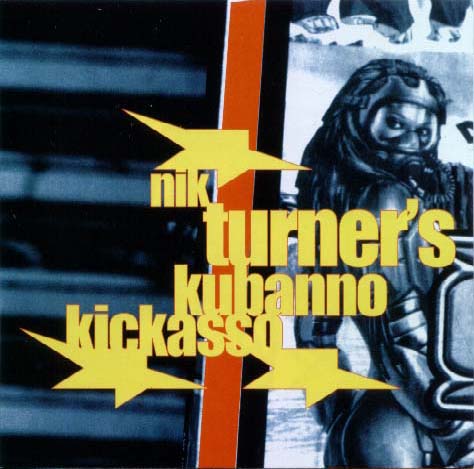
Nik Turner's Fantastic Allstars - 2003 - Kubano Kickasso

Nik Turner's Fantastic Allstars
Kubano Kickasso 2003

Track listing:
01 - LDZ (Guacho Guara) 4:40 - Dizzy Gillespie (arr. Rick Welsh / Nik Turner) - 2:00
02 - Dangle from the Angle 9:13 - Nick Danger / Nik Turner - 3:31
03 - So What 4:26 - Miles Davis
04 - Skatrane (Last Train to Skaville) 6:06 - Ethiopians
05 - Watermelon Man 6:00 - Mongo Santamaria / Herbie Hancock
06 - Grooveyard 4:19 - Rick Welsh
07 - Gibraltar 6:16 - Freddie Hubbard
08 - Sidewinder 7:05 - Lee Morgan
09 - Phat Man 6:06 - Rick Welsh
10 - J.B. 7:35 - Nick Danger / Nik Turner
11 - Cantaloupe Island 5:19 - Herbie Hancock
12 - Jive Samba 6:08 - Nat Adderly


Personnel:
Nik “Thunder Rider” Turner - sax, flute and vocals
Ricky “Baby Face” Welsh - trumpet, flugelhorn and vocals
Mike “Black Notes” Jones - Hammond organ, piano
Gary “Hot Shot” Smart - bass
Meurig “D.W.” Griffiths - drums
Ben “Bad Ass” Baddoo - percussion
Simon “Samba Gales"” Preston - percussion
Raul “Rico Mambo” Speek - percussion
Christopher “Pixie” May - electric guitar


Kubano Kickasso
is the long awaited studio album from Nik Turner's “Fantastic Allstars” ensemble, augmented by familiar guest percussionists. This is zoot cool jazz that begs you to dance, shaken (and occasionally stirred) with latin grooves, Afro-Cuban rave, and a healthy dose of boogie. Featuring some flash original tunes as well as several of the Allstars' own particular flavour of cherished standards, its outstanding clarity delivers all the customary sensation of their club presence. A must-have soundtrack for your next party.


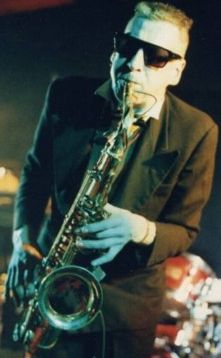
Nik Turner
From Wikipedia, the free encyclopedia

Nik Turner is a British musician, probably best known as a founder of space rock pioneers Hawkwind. Turner plays saxophones, flute, sings and is a composer. While with Hawkwind Turner was known for his experimental free jazz stylizations and outrageous stage presence, often donning full makeup and Ancient Egypt-inspired costumes.Days with Hawkwind and personality conflicts
Despite his seemingly Pleasant personality, Turner battled frequently with bandleader/guitarist Dave Brock, who felt that the former overplayed in a distracting fashion and used musical pretenses to disguise his poor playing. Turner's relationship with bassist Lemmy Kilmister gradually disintegrated throughout the early 1970s, spurned on by a feature in New Musical Express that seemed to portray Kilmister as the sole frontman of the group. Fundamentally, Turner's "quintessential hippie" persona clashed with Kilmister's identification with bikers and use of amphetamines.

After Kilmister was arrested for illegal posession of amphetamines during a 1975 North American tour, Turner instigated the bassist's dismissal from Hawkwind. Other band members, namely Brock, came to regret the reluctant decision, and Turner began to be perceived as something of a manipulator. After 1976's Amazing Sounds, Astounding Music, a poorly received fusion-oriented release heavily influenced by Turner, he ceased playing with the group. This too was a bone of contention: while Brock and lead singer Robert Calvert claimed they had dismissed Turner (with two other members), the saxophonist characterized it as more of a band mutiny against the twosome.

Later Years
Over the years Turner has played with many musicians and collaborations. Much of his output continued in the Hawkwind vein, but Turner has also explored other genres. Directly after leaving Hawkwind in the mid 1970's, Turner formed the band Sphinx with Steve Hillage of Gong.

In the late 1970s when Steve Took's Horns broke up he formed Inner City Unit (ICU) from the key Horns members: Judge Trev Thoms and Dino Ferari although Steve Peregrin Took (ex-T Rex) continued to work with his former band members and guested with ICU at a number of gigs.

Turner eventually resolved his differences with Brock and rejoined various reconstituted Hawkwind line-ups throughout the 1980s. He performed at the final Stonehenge Free Festival in 1984.

Turner also worked with Twink under the name PinkWind, a group named by combining the monikers of the musicians' former groups: Turner's Hawkwind, and Twink and Steve Took's Pink Fairies. Mick Farren was also a member. PinkWind released two albums. Some line-ups also featured Judge Trev Thoms.

In 2000 Turner apologized to Kilmister and organized a one-off reunion of the seminal [[Space Ritual]] line-up of Hawkwind (excluding Stacia and Calvert). Although lofty plans included further apperances and a live album extracted from the show, as of 2006 nothing has materialized due to renewed animosity between Turner and Brock.

Recently, his two main bands have been SpaceRitual and Nik Turner's Allstars with flexible and overlapping line-ups (as was the case in the early 1970s with Hawkwind and the Pink Fairies.) At some of his gigs former Hawkwind members have guested including Ron Tree and, until his death, Robert Calvert.

Turner regularly plays with new and experimental musicians and also busks with his roadie Erv near his home in Wales.

His current musical endevours include the jazz/funk quintet Galaktikos and an album & tour with American space rockers Spaceseed.

Thursday, 24 August 2006

August 2006

Tuesday, August 8, 2006

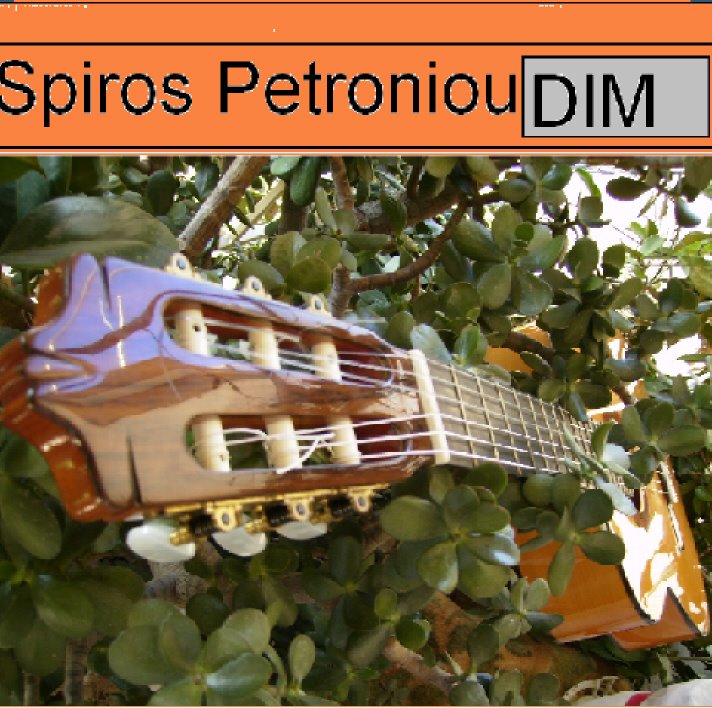
Spiros Petroniou - Dim

Spiros Petroniou - Dim

"Roaming in the sounds of Mediterranean with a classic guitar" S.P.

01 Thought
02 Flying
03 Adventure
04 Dim
05 Xotiko
06 Joy Came
07 Medley
08 Utokitharo
09 Zeibekic
10 Flamencanatolic
11 Improvisation
12 Mysterio

This is the first self-release from Spiros Petroniou.
This album contains various music influences (basically Mediterranean music).
Most of the songs are played with a Classic Guitar
(you can find also some percussions).

get it here

Recommended to leave comments !!!

Monday, 24 July 2006

July 2006

Sunday, July 23, 2006

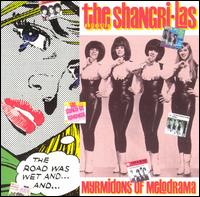
Τhe Shangri-Las - Myrmidons Of Melodrama


Τhe Shangri-Las - Myrmidons Of Melodrama


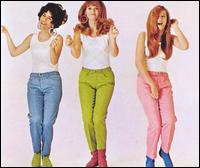
Τhe Shangri-Las were among the greatest girl groups; if judged solely on the basis of attitude, they were the greatest of them all. They combined an innocent adolescent charm with more than a hint of darkness, singing about dead bikers, teenage runaways, and doomed love affairs as well as ebullient high-school crushes. Originally the Shangri-Las were comprised of two pairs of sisters from Queens, NY (identical twins Marge and Mary Anne Ganser and siblings Mary and Betty Weiss). They had already recorded a couple of obscure singles when they were hired by George "Shadow" Morton to demo a song he had recently written, "Remember (Walkin' in the Sand)." The haunting ballad, with its doomy "Moonlight Sonata"-like piano riffs, wailing lead vocal, and thunderous background harmonies, seguing into an a cappella chorus backed by nothing except handclaps and seagull cries, made the Top Five in late 1964. It also began their association with Jerry Leiber and Mike Stoller's Red Bird label, which would handle the group for the bulk of their career.Unlike some girl groups, the Shangri-Las were dynamic on-stage performers, choreographing their dance steps to their lyrics and wearing skin-tight leather pants and boots that were quite daring for the time.


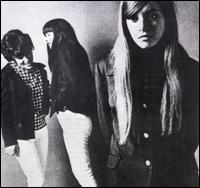
Their real lives, however, were not without elements of drama themselves. Their constant personnel changes baffle historians; sometimes they are pictured as a trio, and sometimes one of the members in the photos is clearly not one of the Weiss or Ganser sisters. Worse, the Red Bird label ran into serious organizational difficulties in the mid-'60s, and wound down its operations in 1966. The group moved to Mercury for a couple of dispirited singles, but had split by the end of the 1960s. Even today, the Shangri-Las' history remains somewhat murky and mysterious; the original members have rarely reunited for oldies shows or talked to the press. The situation was exacerbated by frustratingly substandard reissues of their Red Bird work, which made it impossible to collect all of their fine sides without buying numerous packages, many of which boasted shockingly shoddy sound quality. Happily, the situation was rectified in the mid-'90s with excellent, comprehensive compilations of the Red Bird material in both the U.K. and U.S.


This 33-track production finally sets the record straight, including all of the significant A-sides, B-sides, and album tracks they recorded for Red Bird between 1964 and 1966, as well as an earlier single for a different label, and four radio commercials.

Tracks :
01. Remember (Walking In The Sand) 2:15
02. It's Easier To Cry 2:30
03. Leader Of The Pack 2:52
04. What Is Love 2:23
05. Give Him A Great Big Kiss 2:08
06. Maybe 2:33
07. Out In The Streets 2:49
08. The Boy 2:42
09. Give Us Your Blessings 3:16
10. Heaven Only Knows 2:09
11. Right Now And Not Later 2:37
12. The Train From Kanses City 3:20
13. Never Again 2:22
14. I'm Blue 3:30
15. What's A Girl Supposed To Do 3:05
16. The Dum Dum Ditty 2:24
17. You Cheated, You Lied 2:24
18. I Can Never Go Home Anymore 3:16
19. Bull Dog 2:38
20. Long Live Our Love 3:08
21. Sophisticated Boom Boom 2:10
22. He Cried 3:07
23. Dressed In Black 2:51
24. Past, Present And Future 2:41
25. Paradise 3:14
26. Love You More Than Yesterday 2:39
27. Wishing Well 2:05
28. Hate To Say I Told You So 1:36
29. Give Him A Great Big Kiss 2:14
30. How Pretty Can You Get 0:11
31. Revlon Endorsement 0:14
32. Good Taste Tip 0:52
33. Dating Courtesy Tip 0:56

Your Download-Link:
http://rapidshare.com/files/4807873/shangrilas.rar

Saturday, July 22, 2006

The Crystals - Best of The Crystals

The Crystals - Best of the Crystals

Among aficionados of the girl group sound, there can't be five acts more beloved than the Crystals. Their best-known songs, which include "He's a Rebel," "Uptown," "Da Doo Ron Ron," "Then He Kissed Me," and "There's No Other Like My Baby," are among the finest examples of the best that American rock & roll had to offer in the period before the British Invasion; and decades into the CD era, the group's records are still prized in their original vinyl pressings even by non-collectors, who seem to recognize that there was something special about the Crystals' work. The group was originally a quintet consisting of Barbara Alston (born 1945), Dee Dee Kennibrew (born 1945), Mary Thomas (born 1946), Patricia Wright, and Myrna Gerrard, organized by Benny Wells while they were still in high school. All of whom had started out singing in churches; Barbara Alston was Wells' niece, and although she later became known as their lead singer on many of their records, Alston was actually recruited as a backup singer by her uncle. Under Wells' guidance, they began performing in more of a pop vein, and one of the gigs that they got was cutting demos for the publisher Hill & Range, which brought them to the Brill Building in midtown Manhattan. It was there, while they were rehearsing, that they chanced to be heard by Phil Spector, who at that time was just starting up his own label, Philles Records. He was in the market for new talent and the Crystals — who, by that time, had lost Gerrard and added La La Brooks to their lineup as lead singer — were just what he was looking for, sort of. He liked their sound and their range, but he didn't initially like Brooks' voice and insisted on Alston taking the lead, somewhat reluctantly on her part. In September of 1961, the slightly reconfigured group cut their first hit, "There's No Other Like My Baby," which rose to number 20 nationally. It was a promising beginning, putting the group, Spector, and his new label on the map; although another song cut at about the same time, "Oh, Yeah, Maybe, Baby" (which featured Patricia Wright on lead), pointed the way to the group's future, with its understated yet boldly played string accompaniment. In early 1962, the Crystals recorded a Barry Mann/Cynthia Weil song called "Uptown," using an arrangement that was a tiny bit lighter on the percussion (except for castanets, of which it had many) but pushed the guitar and the strings out in front more than "Oh Yeah, Maybe, Baby" had. Barbara Alston's strong-yet-sensuous vocals enunciated lyrics that were as steeped in topical subject matter, especially about the frustrations of life in the ghetto, as they were in romance. This gave "Uptown" a subtly two-pronged appeall; it was a gorgeous pop record, but also a new kind of pop record, eminently listenable yet serious in its subtext. No, it wasn't "Blowin' in the Wind," but it seemed to evoke a social realism that heretofore eluded the pop charts. "Uptown" reached number 13 nationally. Its production marked a major step forward in the making of rock & roll singles in its production, and heralded a newer, bolder era in pop music and R&B, very much of a piece with such hits as the Drifters' "Up On the Roof," but with an undercurrent of frustration that the latter song lacked; it all pointed the way toward the more sophisticated and socially conscious kind of songs that Sam Cooke would soon be generating. It was at this point, in the wake of "Uptown," that the history of the Crystals gets a little more complicated. It wasn't until June of 1962 that they had another single ready to go, and it engendered all kinds of problems that "Uptown" had avoided. If that song had gotten a serious lyric across with an elegant and quietly passionate setting, "He Hit Me (It Felt Like a Kiss)" (co-authored by Carole King and Gerry Goffin, no less) was the reverse, presenting a disturbing lyric about infidelity and the physical abuse of a woman by a man, in a dark, ominous manner. Barbara Alston and company gave it everything they had, and Spector came up with a surprisingly subtle, bolero-like arrangement, but it was a lost cause. Radio stations simply wouldn't play it, and the public didn't like the song, period; according to Barbara Alston, the group didn't like it either, and to this day nobody understands exactly what was in Spector's mind when he cajoled them into cutting it. The following month, Spector was back in the studio running another Crystals session, except that this time it wasn't really the Crystals that he was recording, but Darlene Love. As the owner of the Crystals' name and, as their producer, possessing the right to record anyone he wanted (or anything he wanted) and label it as being from "the Crystals," he decided to forego any further battles over who should sing lead, and forego using the group entirely for "He's a Rebel." A celebration of street-level machismo like no other, it was an upbeat number with gorgeous hooks and, with none of the baggage of its failed predecessor, became a number one hit, as well as engraining itself in pop culture history as a quintessential girl group classic. Darlene Love was the lead singer on the next hit by "the Crystals," "He's Sure the Boy I Love," as well. It wasn't until early 1963 that the group again sang on one of their own records, "Da Doo Ron Ron," and by that time, Spector had accepted La La Brooks in lieu of Alston as lead singer. That record rose to number three in America and became their second biggest British hit, reaching the number five spot in the U.K. That placement, along with the U.K. number two position for "Then He Kissed Me" (which also got to number six in America), was very important, because at the time a lot of major British bands were about to break onto the charts at home, before coming to dominate American music a year later. "Da Doo Ron Ron" and "Then He Kissed Me" became among the most popular American rock & roll songs of the period in England, covered by all manner of acts on-stage and on-record. The Crystals were in a seemingly enviable position, except for the fact that they and Spector were increasingly at odds over what he was doing with them. They'd been unhappy from the time when Spector began using their name on behalf of records made by Darlene Love, and every time they were obliged to perform those songs on-stage it grated against them, and in 1963 they were almost constantly touring and performing. By 1964, they also perceived Spector's growing inattention; he had lately discovered a girl trio called the Ronettes on whose music and lead singer, Veronica Bennett, he was lavishing ever more of his time and energy. Meanwhile, the Crystals were making good and interesting songs, such as the beautiful "Another Country, Another World," "Please Hurt Me," and "Look in My Eyes," the latter a bluesy ballad that showed a side of their sound that Spector seldom tried to explore. The group had released two LPs hooked around their major hits, Twist Uptown and He's a Rebel, in 1962 and 1963, respectively, that had some good songs on them, but Spector's attention and enthusiasm was increasingly directed elsewhere. Spector's seeming dismissive attitude toward the group may have been best illustrated by the most bizarre record with which he, the group, his label, or almost anyone else in the music business had ever been associated: "(Let's Dance) The Screw." Spector had never been one to keep business partners very long — in that regard, he was a lot like the movie mogul Samuel Goldwyn — and in 1964, he'd settled a lawsuit against Lester Sill, the man with whom he'd started the Philles label. As a parting shot at Sill — and, it is rumored, to fulfill the terms of a settlement that required him to pay a share of the proceeds from the next Crystals single — he devised an otherwise un-releasable single that Philles pressed, called "(Let's Dance) The Screw." On it, Spector talked the lyrics while the Crystals sang backup, in a five-minute musical joke that is also one of the rarest records of the 1960s (supposedly only a handful were ever produced, one of which was sent to Sill). Personal jokes by their producer were all well and good, but by 1964, following the failure of two consecutive genuine Crystals singles, the group — with Frances Collins replacing Patricia Wright — was no longer interested in working with Spector. The following year they bought out their contract and headed to the seemingly greener pastures of the Imperial label, where they found no success; by that time, the only girl groups that were still competitive in the music marketplace were associated with Motown. By 1966, the Crystals had disbanded, and for five years no one heard anything about the group except in airplay on oldies stations. Spector had even closed down Philles Records, and the resulting unavailability of their records except on the radio only raised the value of the old copies that were out there, and made his periodic reissues of the group's work that much more prized by fans. Then, in 1971, with the rock & roll revival in full swing, the groupmembers reunited and spent a few years delighting audiences on the oldies circuit. Various incarnations of the group resurfaced every so often in the late '70s and 1980s, but at the dawn of the 21st century, Dee Dee Kennibrew was still leading a version of the group and had even managed to get them recorded.


Your Download-Link:
http://rapidshare.com/Crystals.rar

Tuesday, July 11, 2006

Sabicas & Joe Beck - 1966 - Rock Encounter


Tracks :
1 - Inca song
2 - Joe's Tune
3 - Zapateado
4 - Zambra
5 - Handclaps
6 - Flamenco Rock
7 - Bulerias
8 - Farruca

This album shows a fantastic mixture of authentic traditional Flamenco,Progressive and Psychedelic Rock by Spanish legend Sabicas and extraordinary electric Jazzrock guitar by Joe Beck with congenial backing band among others Donald Mac Donald on drums, Warren Bernhardt organ and Tony Levin on bass. This is an album for those, who are willing to look over the edges of their progressive and psychedelic horizon.Great guitar playing (lots of electric and acoustic guitars) all over.Unique and hypnotizing!

_______________________________________________________

Sabicas
Guitarist
Composer / songwriter
Name:Agustín Castellón Campos
Birth: 1912 Pamplona
Death: 1990 Nueva York


"In Sabicas, I saw a new form of playing, something new...". Paco de Lucía

He represented a breaking point for the flamenco guitar and he revealed flamenco to the whole world, via America. He was absolutely innovative, and revolutionised guitar playing with his speed and polished execution with a right hand technique that is unmistakeable and unrepeatable. His influence has been unquestionable for the new generations of guitarists, passing through the work of Paco de Lucía and Serranito.

He was born between Sanfermines (Pamplona's world-famous feast) and gypsies, in the city that Hemingway made popular with his pen, and his parents bought him his first guitar when he was four years old, when he was just strong enough to lift it. Two years later, he was already making his debut on a stage. In his beginnings, he was a fanatic follower of Ramón Montoya. Nonetheless, his work accompanying the most important cantaores of the time helped him to conceive a far more personal style of playing.

During the Civil War (1936) he went into exile to South America with Carmen Amaya and, together, they embarked on several tours. Sabicas grew fond of those lands, and settled in New York, where he played concerts as a solo artist. He became open minded, to the point where he made the first attempt at fusion with Joe Beck, Rock encounter (1966). He also struck up an important relationship with jazz masters like Charles Mingus, Ben E. King, Gill Evans, Thelonius Monk and Miles Davis. He even played for President Roosevelt in the White House and was treated as just another artist by the record labels, which distributed his records all over the world.

He did not return to Spain until 1967. Twenty years later, his country of birth gave him a national tribute for the first time, in the Teatro Real in Madrid. Earlier, in 1982, Pamplona had dedicated its feast, the Sanfermines, to him. He recorded with Enrique Morente a year before he died.